

This review is spoiler free.
A retired man from Portugal settles down in the small town of Golden, Georgia. His name is Theo. He’s a wholesome old man who lingers over pieces of art and wonders of nature. Theo becomes a regular at the local coffee shop. There, beautiful hand-drawn portraits adorn the walls. The subjects are all local Goldenites, but no one buys the portraits despite their excellent craft and reasonable price. Theo takes it upon himself to buy the portraits, track down the subjects of the pieces, and present the portraits as a gift to each person. This is one of the many ways Theo ingratiates himself to the people of Golden. Golden’s residents open up to Theo, his generosity and earnestness, even as Theo stays a little aloof from them—he never tells his last name or gives more than a few fuzzy details about his past. It doesn’t take long before people can’t imagine their lives without Theo.
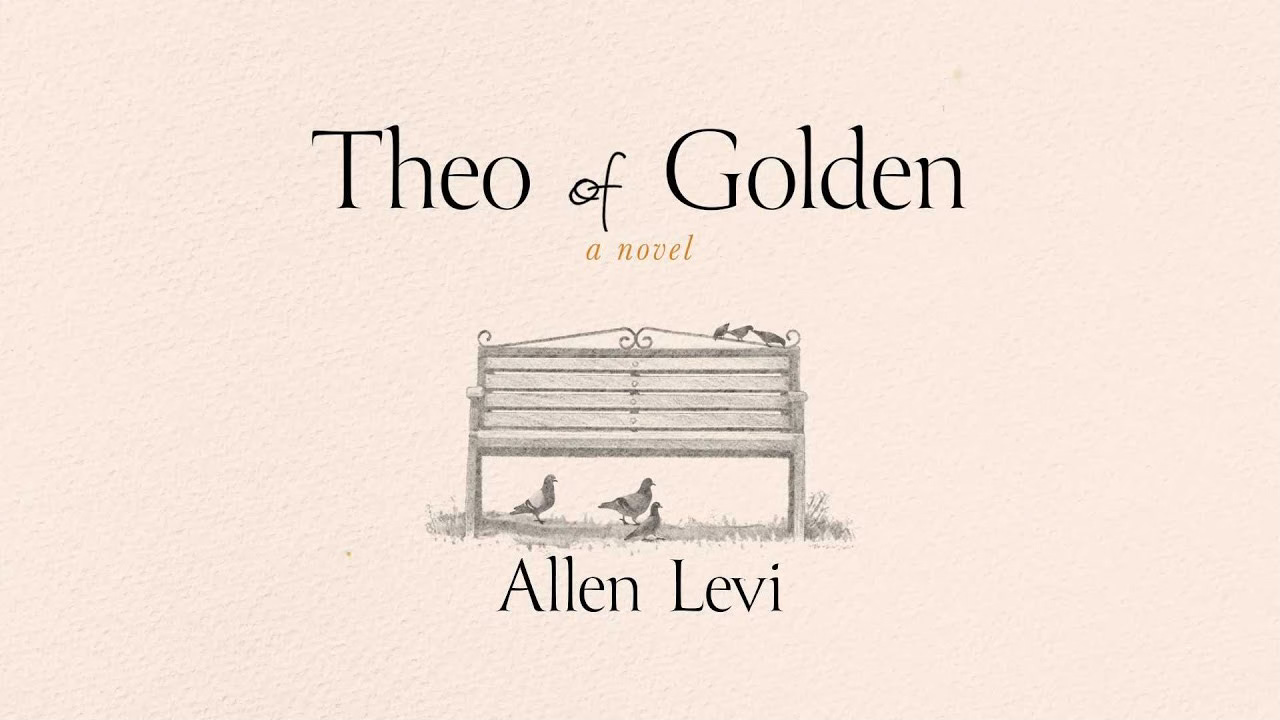
This is the plot of Theo of Golden, one of the biggest literary phenomenons in recent years. The author, 70-year-old Allen Levi, decided to write it as a challenge to himself. He never expected to publish the book. But friends from his prayer group insisted he try to share it with the world. So, Levi self-published the book in 2023. He employed his niece to help him with the process. That year, the book sold 3,000 copies—a great success for a self-published book. In 2024, it sold 25,000 copies—a huge achievement. According to this piece from the Washington Post, around Spring 2025 people in the publishing industry were astonished by the success of “the white book,” referring to the simple cover design. An imprint of Simon & Schuster acquired the book and, as of last month, it’s sold over one million copies in all formats. It shows no signs of slowing down.

This type of success doesn’t happen to debut self-published novels. Especially ones as unapologetically Christian as Theo. After being aware of the novel for a while, I finally read it. I cried as I finished it up on Easter morning. Theo of Golden is a moving, unpolished, breath of fresh air. Here’s my review of the phenomenon that moved me in ways I wasn’t expecting.
Attention, Art, and True Masterpieces
One of the novel’s themes is attention. Theo has an incredible attention span. He often looks at works of art for long periods of time, he watches the sunset every night, and writes letters by hand instead of typing them. Other characters also display impressive attention spans which impact their lives in positive and negative ways. One couple puts all their attention on their careers (which leaves no attention for their home and burgeoning family). Another character, a cello protege, spends hours rehearsing to master his craft. Many readers have noticed that phones are noticeably absent from the book. Only one character is attached to his phone. He commits the sin of dividing his attention between the people he’s with and the important business calls that constantly light up his device.
The novel encourages readers to pay attention to the right things. Where we spend our attention reveals our values.
One of the things worthy of our attention, according to the book, is the fine things in life—art, good music, well-prepared food. Attention helps us discern between good art and bad art, good food and great food, simple music and symphonies. Theo appreciates fine things. If he wasn’t so kind, he might be a snob! When he buys his first drink at the local small-town coffee shop, he “was more than a little surprised at the quality of the espresso” (7). This man has been all over Europe. He has had plenty of fine espresso. Luckily, Golden’s coffee shop can accommodate his tastes. During his time in Golden, Theo frequents one of the nicest restaurants in town—The Canto. You can tell it’s fancy because the owner’s name is Chef Bouchard. Elsewhere, Theo displays an impressive knowledge of classical music and can even talk shop with the town’s cello protege. They discuss the merits of different bows (“I play with a DZ Strand, number 805. Ebony frog. Quad-A Mongolian horsehair.” Whatever that means).
Theo has all the ingredients for snobbery except for how he treats people. Snobs look down on people. Theo looks at people. Though Theo is so discerning when it comes to food, music, interior design, he lacks any and all discrimination for people. He talks with the poor, the wealthy, the grumpy, street buskers, homeless people, and lawyers.
Theo of Golden is ultimately about art. But Theo’s actions make it clear that the best masterpieces aren’t hanging on the walls of museums but walking all around us. When Theo bestows the portraits to their rightful subjects, he incarnates the abstract idea of the imago Dei—the belief that all people are made in the image of God and are therefore beautiful and worthy of infinite respect and dignity. Theo, who is so discerning and snobbish when it comes to everything else, will turn his impressive attention toward all people and not inspect them but appreciate them for the masterpieces they are. In this way and many others, Theo is clearly an analogue of Jesus. Jesus was comfortable with Pharisees, prostitutes, working class men, children, etc.
Theo of Golden has clearly struck a chord with people. This means it has tapped into one of our basic desires as humans. I think the main desire the book has tapped into is our desire to be seen. We all desire for someone to truly see us. We want someone to lay eyes on our sadness, appreciate our hard work, and commend our virtues. Sometimes we need other people to see us because there are things about us we have lost sight of. Theo does this for the citizens of Golden. Again and again, Theo sees strengths and attributes incipient in the portraits that the subjects were unaware of or had forgotten about. One of the many reasons Theo of Golden has done so well is its beautiful portrayal of a man with a discerning eye observing any and all people with love. It reminds us that we have a God who fully knows us (yikes!) yet loves us more than we can imagine (*relieved sigh*).
As I mentioned earlier, this is an unpolished novel. It very much feels like a debut. Some of the characters feel pretty superficial. The world of the novel doesn’t feel fully realized. But every time I wanted to roll my eyes at the novel, I found myself having to wipe them because Levi’s story had moved me once again. Theo of Golden’s strengths and whole-hearted earnestness make it well worth your time.
Believe the hype. Visit Golden. Sit with Theo and see where the conversation goes.
In a great conversation with Russell Moore, Allen Levi and Moore spend some time wondering if Theo could actually exist in the real world. Levi argues yes, there are plenty of people who embody Theo’s values and inhabit the world in a similar way. I agree with Levi. In fact, several artists came to my mind while reading the book.
Here are some real-life Theos I think you should follow.
Jason Leith - Sacred Streets
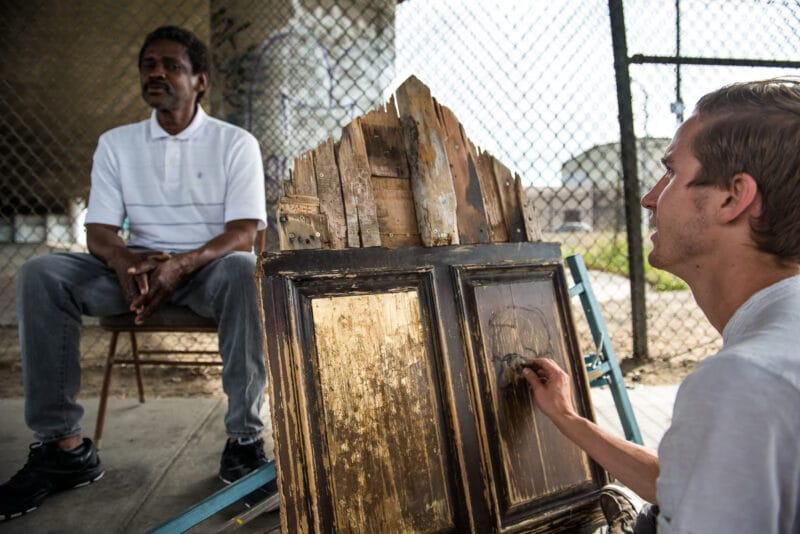
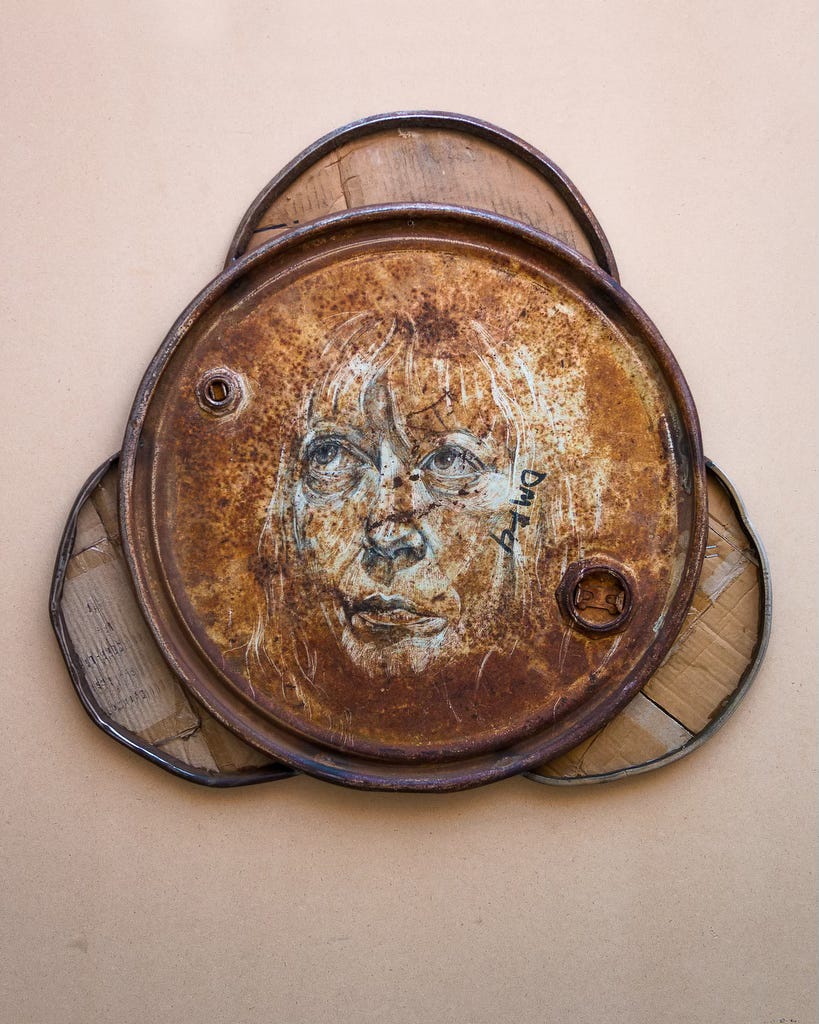
Leith practices what he calls relational portrait drawing. He frequents homeless shelters, food pantries, and nonprofits where he spends time getting to know people who are often unseen and making beautiful sketches of them. He feels like a real-world Theo who sees all people (housed or not) as beautiful and worthy of the attention of an artist.
Tim Lowly
For a series of portraits, Lowly painted loving portraits of his daughter who has a disability. These move me every time I see them. Lowly’s love for his daughter is apparent not only in his dedication to care for her but in the time and attention it took to paint these beautiful portraits of her.

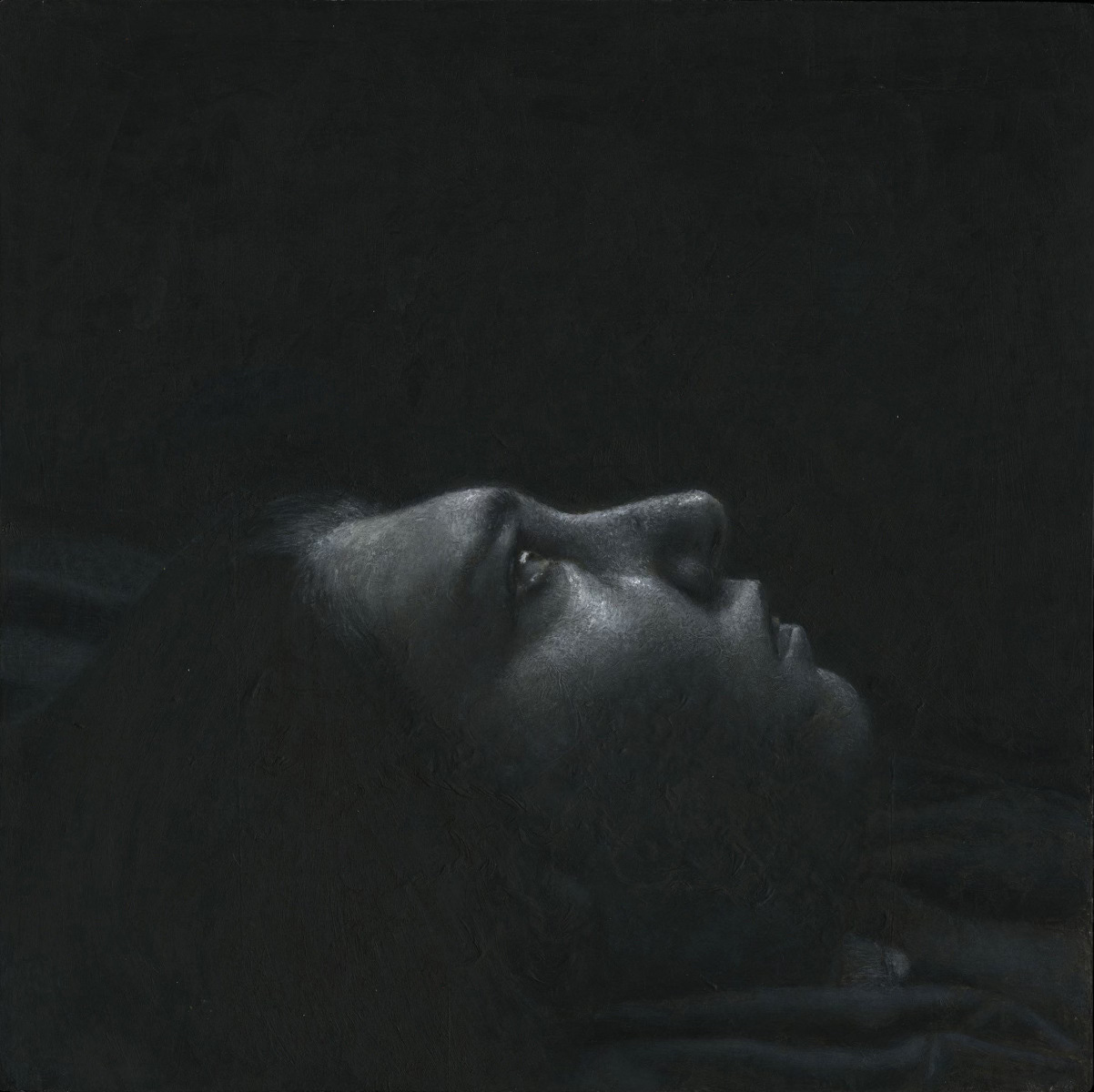
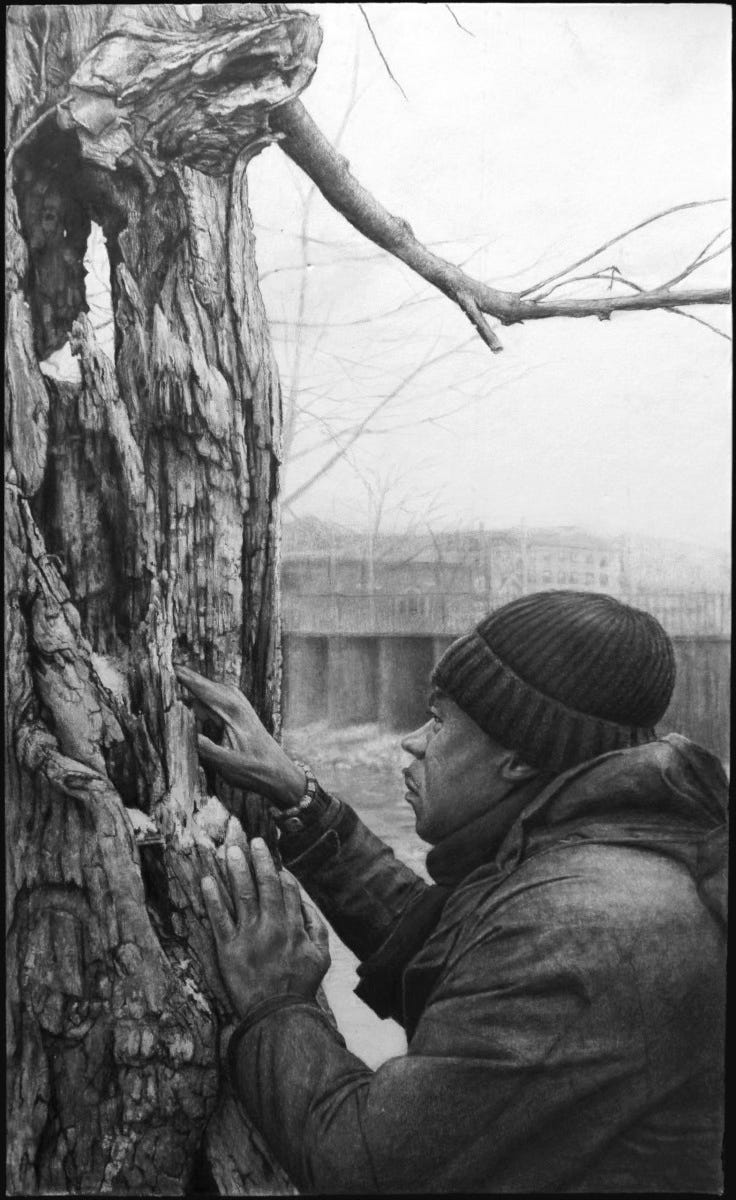
Lowly has also done some amazing graphite drawings that remind me of the drawings from Theo of Golden.
Jenna Huckstep
I got to know Jenna when she moved to Louisville for an internship. She’s a delight to be around and her ability to paint portraits is truly a gift from God. Many of the portraits in this series were people Jenna met walking in the city. She had meaningful conversations with the subjects and painted their portraits.



Great insight on all the reasons I loved this book.
I takes a beautiful person to imagine such a beautiful character as Theo and write this story. Being Jewish, I did not relate to, or even notice, any of the aforementioned Christian imagery. I just saw a kind and loving character who shared his great wealth in small ways that meant a great deal with whom he shared it. We need more Theos in this world today.